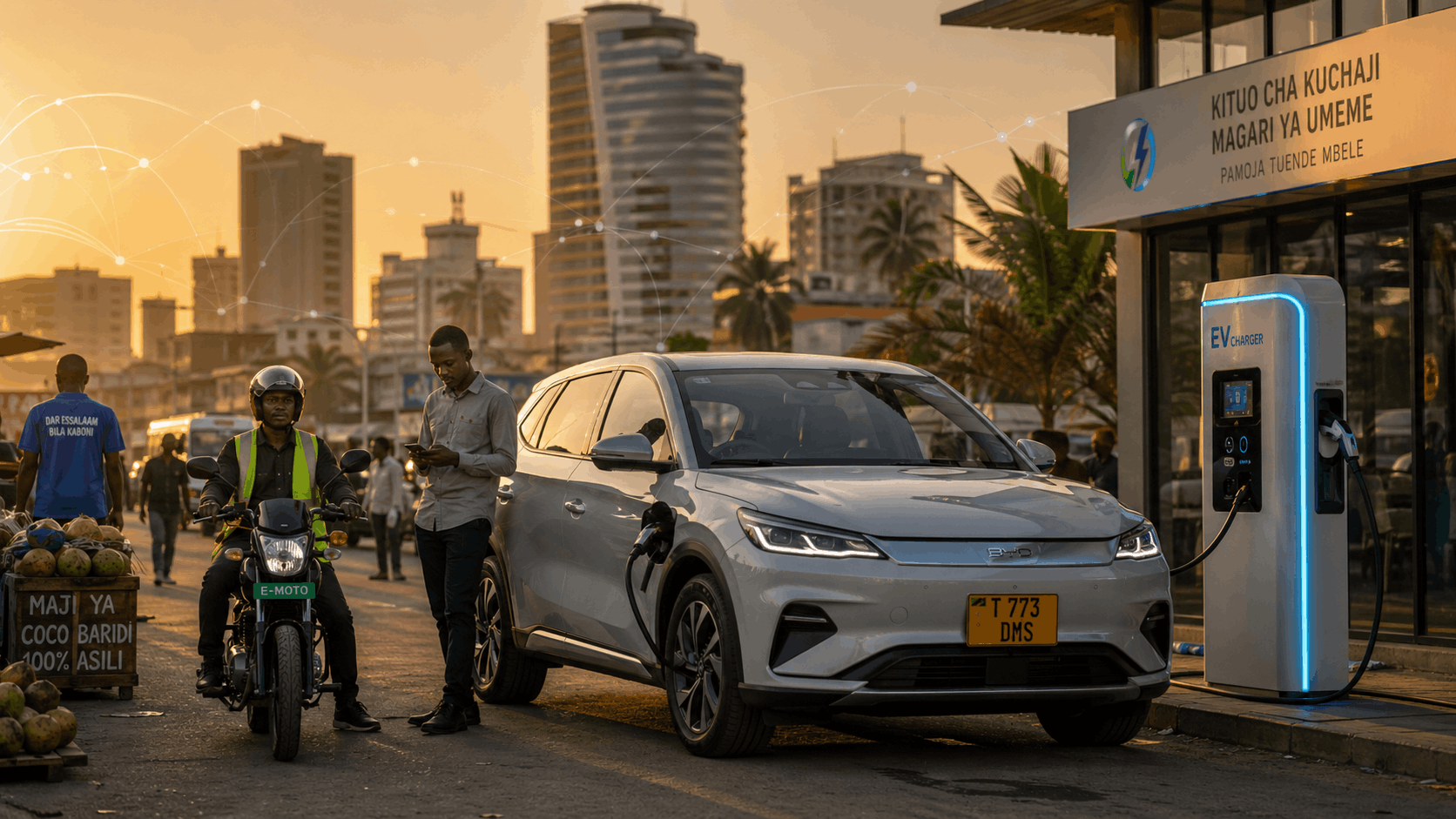
The numbers don't announce themselves. They just keep compounding.
Tanzania's EV market is growing at 40.5% annually. The country already has more electric vehicles on its roads than any other nation in East Africa. A BYD dealership is open in Dar es Salaam. A Tanzanian entrepreneur just commissioned a 60kW fast-charging station. The government has, for the first time in history, passed a formal national EV policy framework.
None of this was supposed to happen this fast. Most Tanzanians are still debating whether electric vehicles are coming. The truth is: they are already here — and they are arriving faster than almost anyone expected.
Tanzania's Quiet EV Lead: The Stat Nobody Talks About
Ask the average person in Dar es Salaam, Arusha, or Mwanza about electric vehicles and you will likely hear the same two questions: "Where do you charge it?" and "Can it handle our roads?" Fair questions — but they miss a more interesting fact hidden in plain sight.
Tanzania already has more electric vehicles than any other country in East Africa. Over 5,000 EVs are currently on the country's roads, a number that represents more electric mobility than the rest of the region combined. In a continent where EV adoption conversations tend to revolve around South Africa and Kenya, Tanzania has quietly built itself a lead.
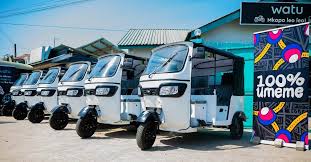 Tanzania's electric bajaj revolution is already reshaping urban transport in Dar es Salaam.
The majority of these are electric two-wheelers and three-wheelers — the bajajs and bodabodas that form the circulatory system of Tanzanian cities. But the four-wheel segment is accelerating, Chinese automakers are moving in with purpose, a homegrown charging infrastructure is being built from scratch, and the government has, for the first time, put a formal policy framework behind all of it.
The question is no longer if Tanzania goes electric. It is how fast — and who benefits.
The Numbers: A Market That's Quietly Exploding
Numbers rarely tell the whole story, but sometimes they tell enough.
Tanzania's EV market, currently valued at around $0.04 billion in 2025, is projected to reach $0.22 billion by 2030 — a compound annual growth rate of 40.5%. That is not a typo. For context, that pace of growth is faster than most of the world's most watched emerging EV markets.
The government has set an official target of EVs making up 5% of all new vehicle sales by 2030, a modest figure that masks the dramatic structural shift required to get there. Meanwhile, in a 2024 consumer survey, 45.5% of Tanzanian respondents said they would prefer an EV priced around $20,000, while 47.3% named a 300km driving range as their top priority — which is well within the range of vehicles already being sold in the country today.
Zoom out to the continent, and the picture gets even more compelling. Africa's overall EV market hit $17.4 billion in 2025 and is expected to reach $28 billion by 2030. Electric car sales across the continent more than doubled in 2024 alone. The wave is building — and Tanzania is not on the shore watching it approach. It is already in the water.
The Big Players: Who Is Already Here
BYD — China's EV Giant Parks in Dar
If you want a single brand to signal that the EV era has arrived in Tanzania, look no further than BYD. The Chinese automaker — which surpassed Tesla in global EV sales in 2024 — officially opened a dealership in Tanzania in October 2025, a move widely celebrated in Tanzanian automotive communities as a turning point.
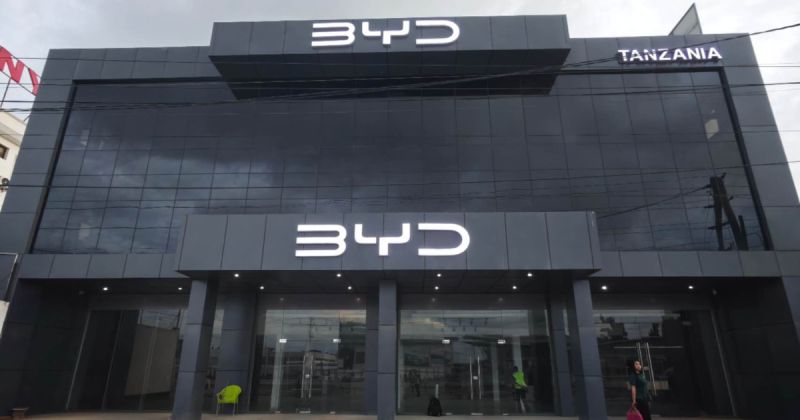 BYD now brings its full lineup — from budget to luxury — directly to Tanzanian buyers.
BYD's lineup spans a wide range of needs and budgets:
- BYD Seagull — A compact city car starting from around $8,000, purpose-built for urban commuting and ideal for Dar es Salaam traffic.
- BYD Dolphin — A step up with a rotating touchscreen, wireless charging, and a 340km range starting at $11,800, with an extended battery warranty.
- BYD Yuan Pro — A compact SUV designed for families, with ample cargo space and multiple USB ports.
- BYD Atto 3 — The flagship mid-size SUV with a 420km range, panoramic sunroof, and full driver-assist technology, priced at around $47,500.
Import duties, shipping, and currency fluctuations affect final pricing — but the arrival of a direct BYD dealership removes the uncertainty that previously came with importing independently. For Tanzanian buyers, this is significant. You can now test-drive, negotiate, and service a BYD in the country you live in.
Chery — The Hybrid Bridge Builder
Chery Auto, another Chinese giant, is pursuing a different but equally smart strategy in Africa: lead with plug-in hybrids. Rather than asking consumers to make a full leap to battery-electric, Chery's vehicles like the Tiggo 8 PHEV and Tiggo 9 PHEV offer the comfort of a petrol backup while dramatically reducing fuel costs. It is a pragmatic answer to the charging infrastructure question — and a smart entry point for markets like Tanzania where charging networks are still maturing.
Chery has set its sights on Tanzania as part of its continental expansion, with its premium sub-brand Omoda & Jaecoo — which already operates 52 dealerships across Southern Africa — conducting feasibility studies and identifying Tanzania as a target market. The brand's strategy across Africa focuses on EVs and hybrids priced under $22,500 — a price point designed to disrupt the used Japanese car dominance that currently defines Tanzania's market.
⚡ GAC Aion — Watching Tanzania from Ethiopia
GAC Aion, the electric vehicle arm of China's state-owned GAC Group, is the third-largest battery EV brand globally after Tesla and BYD. In May 2025, GAC made its official East African debut in Addis Ababa, Ethiopia, launching the AION Y Plus and the premium ES9, and announcing plans to build a local knockdown assembly plant and expand charging infrastructure across the region.
Why does this matter for Tanzania? Because GAC has explicitly stated it is using Ethiopia as a model for East African expansion — and analysts note that Tanzania's large population and relative lack of EV competition make it an attractive next step. The AION Y Plus, with its 286–380 mile range and advanced autonomous driving features, is already positioned as one of the most competitive-priced EV SUVs in Africa. When GAC arrives formally in Tanzania, and indicators suggest it will, Tanzanian buyers will have a genuinely compelling option.
TRÍ — The Bajaj Reinvented, Locally
Not every EV revolution arrives in a sleek sedan. In Tanzania, some of the most important ones came in a three-wheeled, IoT-connected electric bajaj.
TRÍ (operated by Ziotio UN Limited) began its operations in Tanzania in 2020 with a bold idea: sell electric bajajs to Tanzanian drivers at price parity with their petrol equivalents — and let the running cost savings do the talking. The math was undeniable. A litre of petrol travels around 20km and costs $1.20. An electric bajaj covers the same 20km for just $0.20 — one-sixth the cost. That price gap pays back within six to eight months.
 TRÍ's electric bajajs have reshaped the livelihoods of dozens of Tanzanian drivers.
TRÍ holds a full manufacturing licence in Tanzania, assembling vehicles locally in Dar es Salaam from imported kits — a model that brings down costs, creates local jobs, and avoids the import duty traps that cripple many EV businesses in Africa. Drivers can access TRÍ vehicles through a lease-to-own programme or outright purchase, with the TRÍ E2 priced at around $3,500.
The company also partnered with Bolt and asset financer Watu to deploy 25 electric bajaj taxis in Dar es Salaam — one of the first formal ride-hailing EV pilots in the country. Their second-generation bajaj charges in 2.5 hours and delivers 115km of range.
The proof of concept is in the drivers themselves. Ismael Mluge, a 43-year-old former car accessories vendor who bought an electric bajaj through TRÍ, built a loyal customer base without a single ride-hailing app. He spends just Tsh 2,500 to 5,000 per day on home charging. His next goal? Start his own fleet of electric three-wheelers.
E-Motion Africa — Retrofitting the Serengeti
There is a less obvious but deeply Tanzanian EV story unfolding in the safari sector.
E-Motion Africa, based in Arusha, became the first company in Tanzania to retrofit safari vehicles to electric power. For an industry built on the promise of pristine wilderness, the irony of diesel-belching Land Cruisers rumbling through Serengeti has never sat comfortably. E-Motion is fixing that — one converted vehicle at a time.
The company has worked with operators including Kibo Guides (100+ safari vehicles) and Miracle Experience, converting petrol 4x4s into silent, emission-free game drive vehicles. Their work extends to electric buses and e-bikes, all designed for Tanzania's specific terrain needs. In a sector where sustainable tourism has become a genuine selling point — not just a buzzword — E-Motion is years ahead of the conversation.
The Homegrown Heroes: Tanzania Building for Itself
WAGA Motion — Charging Tanzania, One Station at a Time
If TRÍ is building the electric vehicle, WAGA Motion is making sure there is somewhere to charge it.
Founded by Tanzanian entrepreneur Gibson Kawago, WAGA Motion was born from a straightforward observation: the most common reason Tanzanians hesitate to buy an EV is not the price. It is the question — "Where will I charge it?" So Kawago set out to answer that question, starting with a pilot network of charging stations and expanding from there.
In March 2026, WAGA Motion commissioned a 60kW dual-gun DC fast-charging station — a significant infrastructure milestone for Tanzania, where most existing chargers are slow Level 2 units. The company integrates mobile payment systems so drivers can locate available stations in real time and pay via M-Pesa — the kind of user experience design that only works when you deeply understand your local market.
WAGA Motion also plans to install solar and wind energy backup at its stations — a critical safeguard in a country where grid reliability is still inconsistent in some areas. The company's compatible vehicle list reads like a who's-who of EVs available in Tanzania: BYD, GAC, Geely, Tesla, Nissan Leaf, Mitsubishi Outlander PHEV, Toyota RAV4 PHEV, and more.
Kawago's broader vision attracted global attention in 2025, when he won the Global Muhammad Ali Humanitarian Award in the "Giving" category — recognition for his work using circular battery technology to power homes, mobility, and industries across Africa. WAGA Technologies, his sister company, recycles and repurposes lithium-ion batteries into energy storage systems, turning electronic waste into power solutions.
He is proof that Tanzania does not need to wait for foreign innovation. It is building its own.
GreenCharge Africa & eMobility Tanzania
The ecosystem around WAGA Motion is growing. GreenCharge Africa is developing solar-powered charging stations to reduce dependence on the national grid — an approach that is particularly critical for areas outside Dar es Salaam where electricity access is patchier. eMobility Tanzania is also contributing to the charging network rollout, part of an emerging cluster of local companies filling the infrastructure gap that no single actor can close alone.
DART + TRÍ: Charging at the Heart of Dar's Transit System
In September 2024, the Dar Rapid Transit Agency (DART) partnered with TRÍ to install EV charging stations at key nodes of Dar es Salaam's BRT network — including Ubungo Depot, Gerezani Main Station, and Morocco Station, with another planned for the Magufuli Bus Terminal. These stations serve electric two- and three-wheelers providing last-mile connectivity to DART infrastructure.
It is a small but enormously symbolic move. The government's own transit authority investing in EV charging infrastructure is precisely the kind of institutional signal that unlocks private investment, shapes urban planning, and tells the market: this is the direction we are going.
The Government Is Finally Moving
For years, Tanzania's EV story was overwhelmingly a private sector story. Entrepreneurs built the vehicles, installed the chargers, and educated the public — often despite policy uncertainty rather than because of policy support.
That is beginning to change.
 Tanzania's Ministry of Energy is now formally backing the country's EV transition.
The National EV Policy Framework
In December 2024, Tanzania passed the National Electric Vehicles Policy Framework — a landmark piece of legislation that formally creates the regulatory conditions for EV investment to flourish. The framework specifically ties EV adoption to Tanzania's expanding renewable energy grid, encourages local production, and lays groundwork for a national charging infrastructure.
When Tanzania's Ministry of Energy presided over the launch of Dow Elef Auto EV (ZERA) in March 2026 — the first government-backed EV import and assembly company — the Permanent Secretary noted the policy framework as the foundation enabling that launch. The company's plan is phased: import fully built units first, then shift toward local assembly to create jobs and build technical capacity among Tanzanian youth.
Tax Incentives and COSTECH's Push
Tanzania's Commission for Science and Technology (COSTECH) has been driving the tax reform conversation, with its Innovation and Technology Manager Dr. Gerald Kafuku confirming that the government is working toward including EV-specific incentives in tax law — covering both vehicle registration and charging infrastructure. The government is also engaging petrol station owners about installing EV charging points as part of a national transition strategy.
Currently, e-scooters enjoy 0% excise duty in Tanzania, while the broader EV category carries varying exemptions depending on vehicle type. Policy analysts note that Tanzania, unlike 15 other African nations, has not yet fully standardised its EV registration process — a gap the new framework is designed to address.
TANESCO's Economic Case
Tanzania's state electricity provider, TANESCO, has become one of the most vocal institutional advocates for EV adoption — and their argument is refreshingly simple: the maths works.
According to TANESCO, a single full charge costs roughly Tsh 27,768 (approximately 78 units of electricity) and can power a vehicle for up to 605 kilometres. Compare that to petrol costs for the same distance, and the transport cost saving can reach 85%. For a country that imports nearly all of its fuel, this is not just environmentally appealing — it is a national economic argument.
Julius Nyerere Hydropower Plant: The Green Grid That Changes Everything
Tanzania's EV transition is bolstered by something most countries building their EV ecosystems do not have in such abundance: clean energy. The Julius Nyerere Hydropower Plant, completed in 2024 with a 2.1GW capacity, significantly strengthens Tanzania's grid and supports a national electricity access rate that has reached 85.5% in 2025.
This matters because the environmental promise of electric vehicles depends entirely on where the electricity comes from. Tanzania's grid is approximately 60% renewable — dominated by hydropower and growing solar capacity. An EV charged in Tanzania is genuinely cleaner than one charged in many Western countries that still rely heavily on coal.
UNDP's Quiet Pilot in Dodoma
Even international development organisations are putting skin in the game. In 2023, UNDP Tanzania's Energy Efficiency Project equipped its Dodoma office with solar panels to power two new electric vehicles under its Greening Moonshot initiative, replacing internal combustion vehicles and eliminating fuel costs entirely. It is a small-scale pilot, but coming from an institution that advises governments, it carries outsized signal value.
Let's Be Honest: The Road Is Not Yet Smooth
None of this means the electric revolution is happening without friction. There are real, significant obstacles that Tanzania must confront — and glossing over them would be dishonest.
Infrastructure gaps are real. As of 2025, Tanzania has approximately 15 public charging stations, concentrated almost entirely in Dar es Salaam. For a country the size of Tanzania — the largest nation by population and area in East Africa — 15 stations is a skeleton, not a network. Long-distance EV travel outside the capital remains genuinely impractical.
The funding gap is stark. Tanzania's e-mobility companies have secured just over $1 million in combined funding, compared to Uganda's $5 million and Kenya's $50 million. For a country leading the region in EV numbers, this is a structural vulnerability. Without capital, promising local startups cannot scale.
High upfront costs remain a barrier. Even as prices fall, most Tanzanians cannot afford to buy a new EV outright. Financing options are limited, resale values are uncertain, and consumer awareness — particularly outside Dar es Salaam — remains thin.
Registration processes are murky. The Africa E-Mobility Alliance has flagged unclear EV registration processes in Tanzania as a persistent barrier, adding cost and delay for importers and buyers alike. The new policy framework promises to address this, but implementation takes time.
These are not arguments against EVs in Tanzania. They are the arguments for why the next two to three years of policy execution, infrastructure investment, and private sector activity are so critical.
Why East Africa Should Be Watching Closely
Tanzania does not exist in a vacuum. The broader East African region is undergoing a transport transformation that will reshape the economies and environments of every country in it.
To the north, Ethiopia took the boldest policy position on the continent: in January 2024, it became the first nation to ban the import of new petrol and diesel vehicles outright. The move sent a signal that reverberated across every boardroom that sells combustion engines in Africa — and sent Chinese automakers like GAC rushing to establish a first-mover position in the country. Tanzania's EAC membership means it watches, learns from, and is influenced by Ethiopia's direction.
Kenya, meanwhile, has built a more mature EV investor ecosystem — its $50 million in e-mobility funding dwarfs Tanzania's — and is pioneering electric buses in Nairobi through BasiGo's matatu pilot. The lessons from Kenya's BRT electrification are explicitly informing Tanzania's own DART electric bus strategy.
And the continent-wide picture tells a clear story: electric car sales in Africa more than doubled in 2024, with emerging markets growing over 60% year on year. The window to lead this transition — rather than follow it — is open, but it will not stay open forever.
Tanzania is not just watching. It is positioned to shape what East African e-mobility looks like.
So — Is Now the Time?
The answer is already visible in the people who didn't wait.
Yassin Hamisi used TRÍ's lease-to-own scheme in 2020 to secure an electric bajaj without a deposit — and now earns enough to support himself and his family. Ismael Mluge turned street-side car accessories vending into a growing taxi business, and wants to own a fleet. Gibson Kawago turned a problem — where do I charge my car? — into a company that won a Global Humanitarian Award and is now installing 60kW fast chargers across Tanzania.
These are not outliers. They are early movers. And the thing about early movers in a fast-growing market is that they tend to be the ones who build the next generation of wealth.
Is it perfect? No. The infrastructure needs to grow. The policy needs to be implemented, not just printed. Prices need to come down further, financing needs to become accessible, and public awareness needs to catch up with the reality that is already unfolding on the streets.
But here is what is also true: a BYD dealership is open in Dar es Salaam. The Julius Nyerere Hydropower Plant is powering the grid. A Tanzanian entrepreneur just commissioned a fast-charging station that could be in any modern city in the world. The government has a formal EV policy for the first time ever. GAC is eyeing the country from Ethiopia. Chery is on the doorstep.
The electric vehicle era is not arriving in Tanzania. It is not on its way. It is already, quietly, irreversibly, here.
Sources & Further Reading: The reporting in this article draws on data and news from UNEP, Africa E-Mobility Alliance, EV24.africa, AutoMag.tz, The Citizen Tanzania, TanzaniaInvest, CleanTechnica, The Respondents, Anari Energy, and GAC Group.