You've probably seen it — someone in your city goes viral overnight.
Hundreds of thousands of views. Comments flooding in. Shares going through the roof.
Then the question hits you:
"Is that person actually making money from this — or just getting clout?"
It's a question more East African creators are asking every day. And the answer depends entirely on which platform you're building on.
This article breaks down the real monetization difference between TikTok and YouTube for creators in Tanzania, Kenya, Uganda, and the wider East African region — so you can make decisions based on facts, not assumptions.
The Reality of TikTok Earnings in East Africa
Here's the part most people don't tell you.
TikTok does pay creators globally — but not equally.
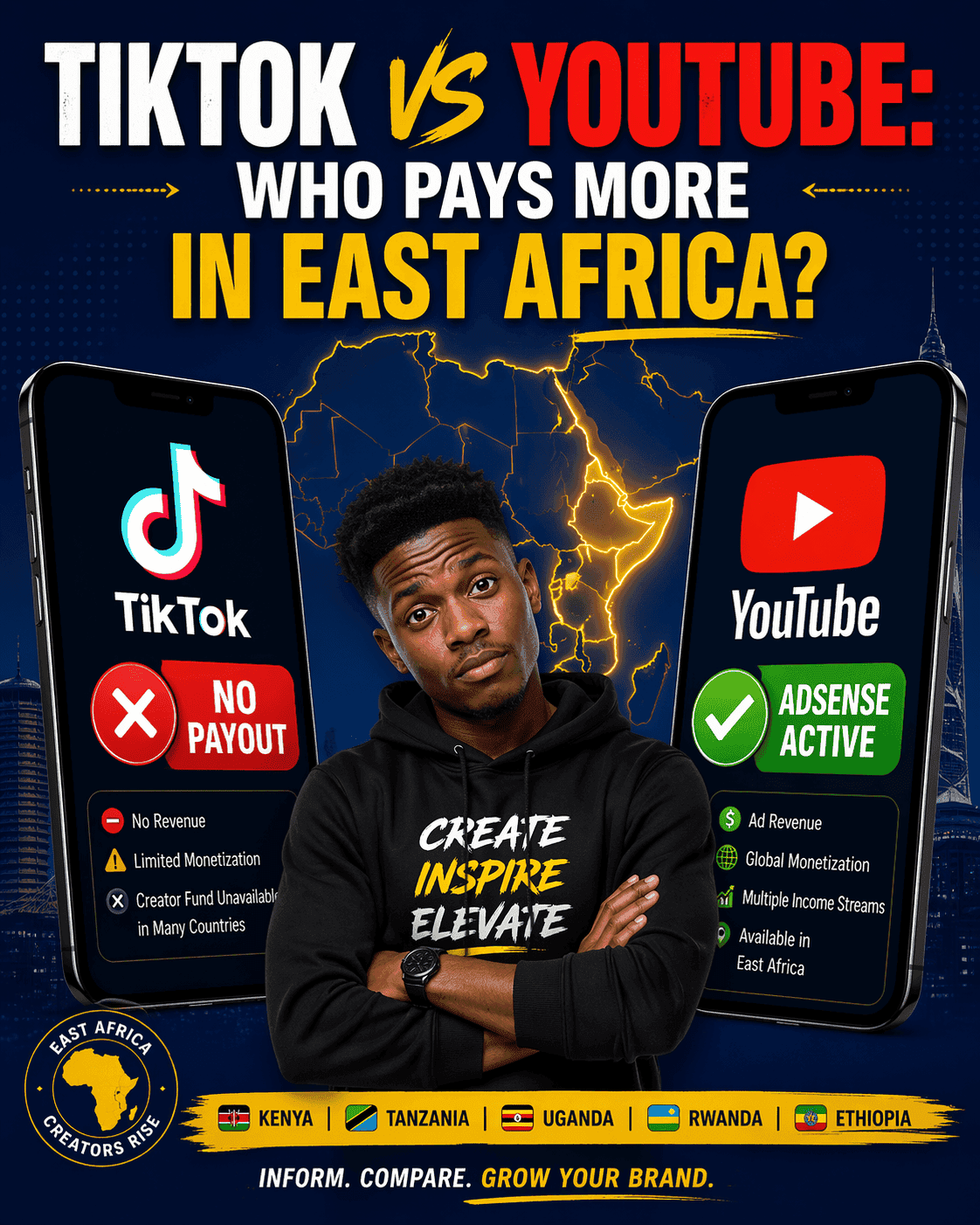
Many African countries are still excluded from TikTok's main monetization programs like the Creator Fund or Creativity Program. This isn't a rumour. It's a structural limitation of how TikTok has rolled out its monetization infrastructure, and East Africa is one of the regions most affected.
That means:
- You don't get paid for views directly
- Going viral does not automatically equal income
- Most earnings available to East African creators come from:
- Brand deals and sponsored content
- Live gifts from followers during live sessions
- Promotions and paid partnerships arranged outside TikTok
If you're in East Africa, TikTok functions more as a visibility tool than a direct income platform — at least for now.
Even globally where TikTok monetization is open, the payouts are relatively low — roughly $0.50–$1.50 per 1,000 views. This means even a video with 500,000 views might earn a creator somewhere between $250–$750. That's before TikTok takes its cut, and that's in markets where the Creator Fund is even available.
The core issue isn't the content quality. It's geography. TikTok's monetization expansion has prioritised the US, UK, and parts of Europe. East Africa is still waiting.
What TikTok Is Good For
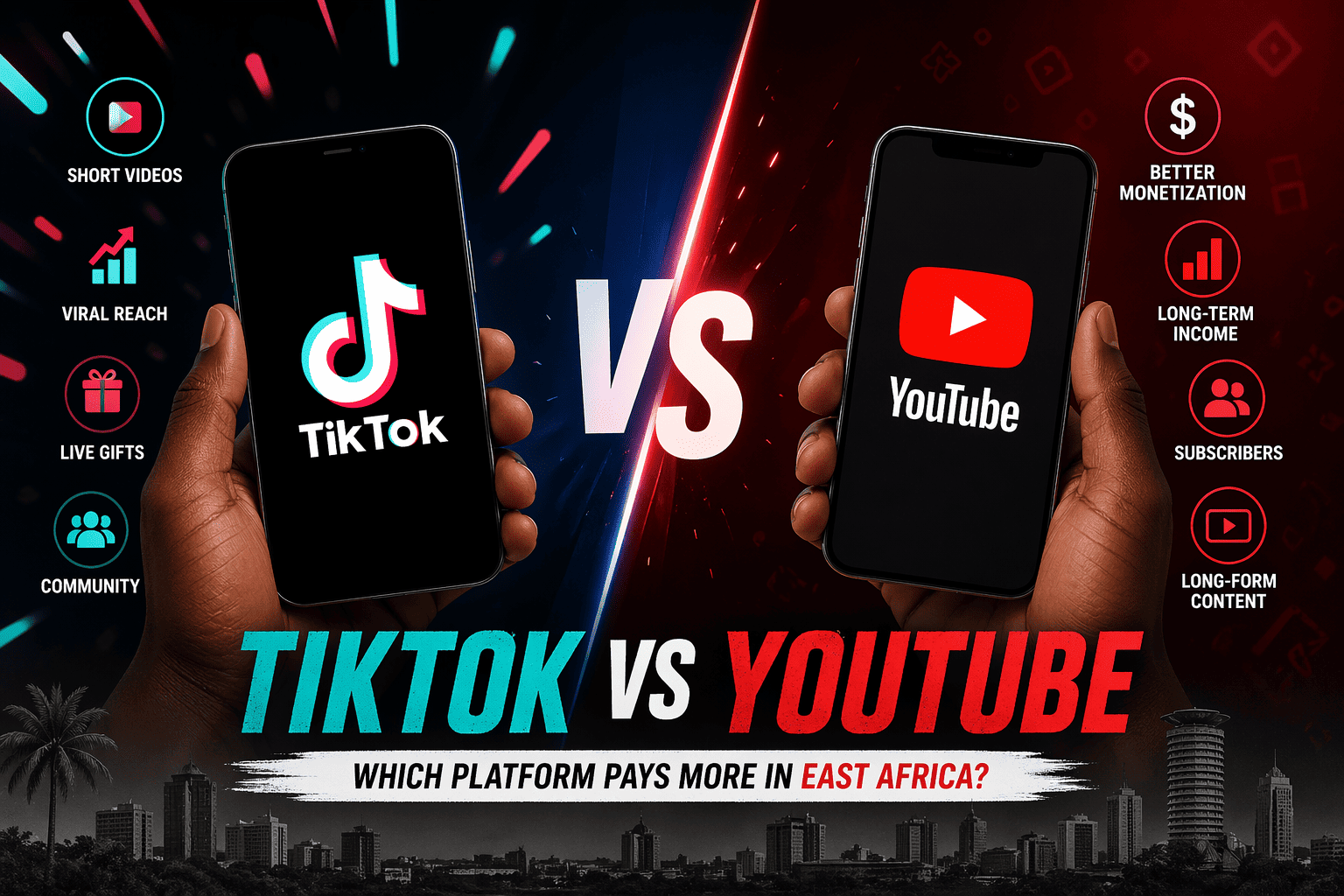
To be fair, TikTok offers real value — just not primarily financial (directly):
- Explosive reach: A well-made video can hit tens of thousands of views in hours
- Algorithm-friendly for new creators: You don't need a large existing audience to go viral
- Community building: It's easier to grow a loyal following quickly on TikTok than on YouTube
- Personal brand: Many creators use TikTok to establish name recognition before monetizing elsewhere
The platform is powerful. But power and payment are two different things.
YouTube: The Quiet Money Machine
YouTube has been around since 2005, and while TikTok gets more buzz right now, YouTube has something TikTok still can't match in East Africa — a working payment system.
Unlike TikTok, YouTube pays creators directly through ads (AdSense) once you meet the requirements. And crucially, this system works in East Africa.
How YouTube Monetization Works
To join the YouTube Partner Program (YPP) and start earning from ads, you need:
- At least 1,000 subscribers
- 4,000 watch hours in the past 12 months (or 10 million Shorts views)
- A linked AdSense account
- Compliance with YouTube's monetization policies
Once approved, you earn from every ad that runs on your videos. And the numbers are significantly better than TikTok:
- YouTube pays around $3–$8 per 1,000 views in most niches
- High-value niches (finance, tech, business) can fetch $10–$20+ per 1,000 views
- Low-value niches (general entertainment, gaming) may be closer to $1–$3 per 1,000 views
Even at the lower end, that's 3–5x more than TikTok's global average — and it's actually accessible to East African creators.
Multiple Income Streams
YouTube doesn't stop at ads. Once you're established, you can earn through:
- AdSense (ads) — the baseline income from video views
- Channel memberships — fans pay a monthly fee for exclusive content
- Super Chats & Super Thanks — viewers pay to highlight their comments during live streams or on videos
- Affiliate marketing — linking to products in your video descriptions and earning commissions on sales
- Sponsored content — brands pay you directly to feature their products
- Merchandise shelf — sell your own branded products directly through YouTube
This combination means a single YouTube channel can have five or six different income sources running simultaneously.
The Power of Evergreen Content
One of YouTube's biggest advantages is something TikTok simply can't replicate: videos that keep earning long after you post them.
A TikTok video has a typical lifespan of 24–72 hours in the algorithm. After that, views drop sharply.
A YouTube video optimised for search can attract viewers months or even years after it's published. A tutorial video posted today could still be pulling in views — and ad revenue — two years from now. This makes YouTube a genuine long-term income asset, not just a momentary spike.
YouTube rewards consistency and long-term content, not just viral moments.
The Big Difference (Simple Truth)
Let's put this side by side:
| TikTok | YouTube | |
|---|---|---|
| Growth speed | Fast — easier to go viral | Slower — takes time to build |
| Algorithm | Very friendly to new creators | More competitive |
| Monetization in East Africa | Limited / indirect | Available and functional |
| Pay per 1,000 views | $0.50–$1.50 (global avg) | $3–$8+ (varies by niche) |
| Content lifespan | 24–72 hours | Months to years |
| Income streams | Brand deals, live gifts | Ads, memberships, affiliates, more |
| Effort required | Lower — short-form content | Higher — longer production time |
So… Which Platform Pays More in East Africa?
Here's the honest answer:
👉 In East Africa, YouTube pays more — and more consistently.
Not because TikTok is a bad platform…
But because YouTube has a functioning monetization system in the region, while TikTok's direct payment programs have not yet expanded here. Until TikTok officially opens its Creator Fund or Creativity Program to East African countries, YouTube remains the more reliable path to direct income.
That said, it's not a competition you have to pick sides in.
The Smart Creator Strategy: Use Both
The most successful creators in East Africa aren't choosing between TikTok and YouTube — they're using both strategically.
Here's the framework that works:
TikTok → for viral reach and discovery Post short, punchy clips. Experiment with trends. Build a following fast. Use TikTok to get your name known.
YouTube → for real income and long-term growth Post longer, more detailed content. Tutorials, deep dives, reviews. Build a library of videos that earn month after month.
The bridge strategy: Post short clips on TikTok that tease your YouTube content. Add a clear call to action — "Full video on my YouTube channel" — and direct your TikTok audience there. This way, TikTok becomes a free traffic source that feeds your income-generating YouTube channel.
Practical Tips for East African Creators
- Pick a niche with search demand. Topics like personal finance, mobile tech, local travel, language tutorials, and business tips do well in East African YouTube markets.
- Post consistently, not just frequently. One quality video a week beats seven rushed ones.
- Optimise your titles and thumbnails. Most of your YouTube views come from search and suggested videos — good SEO matters.
- Build your email list or WhatsApp community. Don't rely entirely on platform algorithms. Own your audience.
- Diversify income from day one. Even before hitting monetization thresholds, you can start affiliate marketing or promote your own services.
Final Word
Going viral is exciting. But going viral without a monetization strategy is just entertainment.
If you're a creator in East Africa serious about building income from content, the data is clear: YouTube is where the money lives right now. TikTok can help you grow, but YouTube will help you earn.
Use TikTok to build your audience. Use YouTube to build your income. Build both at the same time, and you'll have a content strategy that actually works — not just one that looks good on a dashboard.
The creators winning in East Africa aren't waiting for TikTok to fix its monetization. They're already building on the platform that pays.