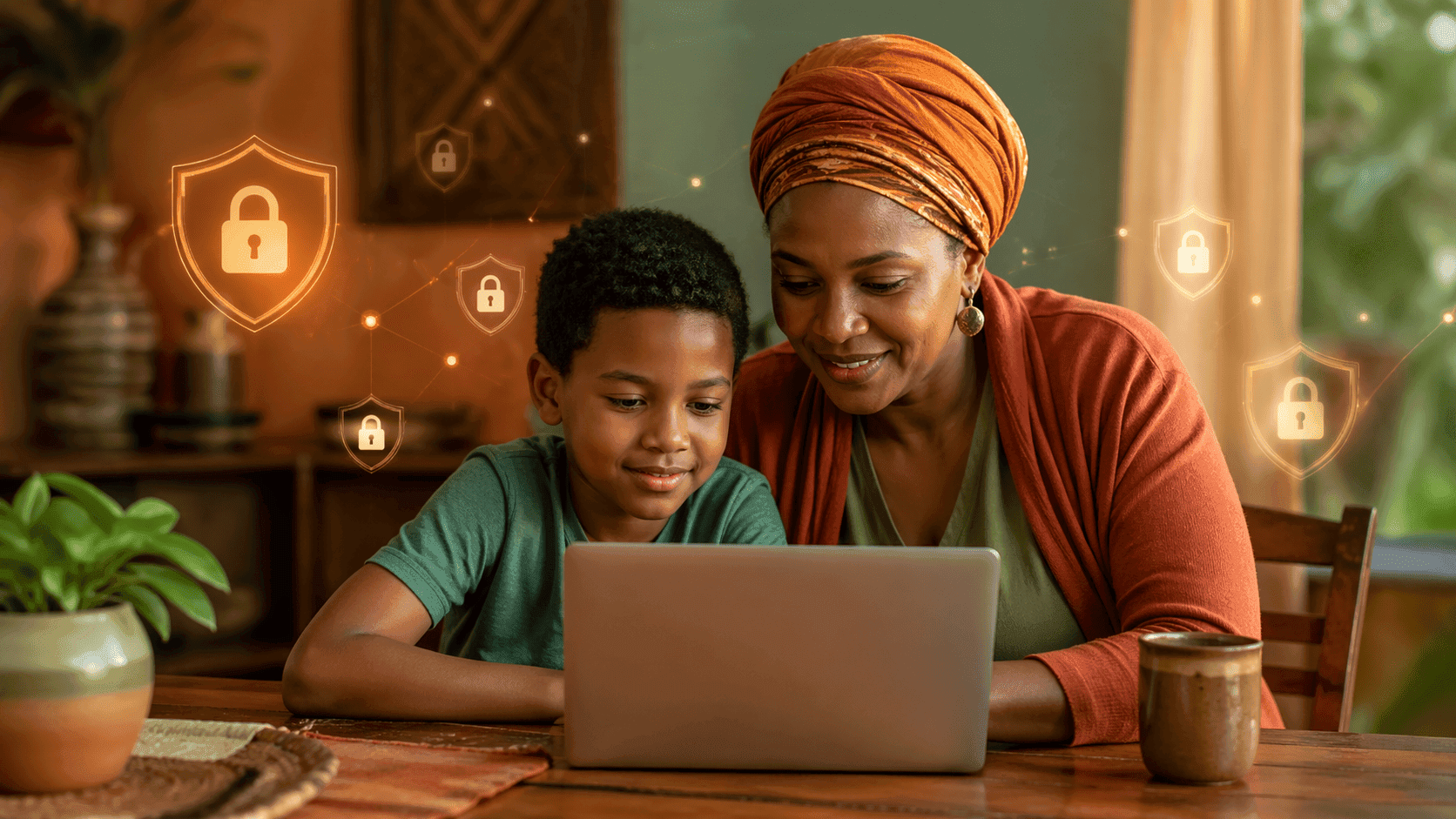
A generation ago, most parents worried about who their children spent time with after school. Today, many of those interactions happen through screens on WhatsApp, TikTok, Instagram, online games, and group chats that adults rarely see.
Across East Africa, children are getting online earlier than ever. Affordable Android phones, cheaper data bundles, school internet access, and public Wi-Fi have made digital access part of everyday life. That access brings enormous benefits: learning opportunities, creativity, communication, and exposure to the wider world.
But the same internet that helps a child learn mathematics on YouTube can also expose them to cyberbullying, online predators, scams, explicit material, and manipulation designed to exploit curiosity or loneliness.
The difficult part for many parents is that online danger rarely looks dangerous at first. It often arrives disguised as friendship, entertainment, humour, gaming, or “just another app.”
The good news is that effective online safety does not require technical expertise. In cybersecurity, prevention usually comes down to awareness, habits, and early intervention. The same principle applies at home. Parents who stay engaged, understand the risks, and maintain open communication dramatically reduce the chances of serious harm.
This guide breaks down the most common online threats affecting children in East Africa and explains practical steps parents can take right now to build safer digital habits at home.
The Reality of Online Risk in East Africa
Child online safety is no longer a niche issue affecting only wealthy countries. East Africa is experiencing rapid digital growth, and children are becoming active internet users long before they fully understand the risks attached to online platforms.
According to the African Union’s Child Online Safety and Empowerment Policy, more than 175,000 children globally access the internet for the first time every day. Across Africa, internet adoption among young people continues to rise quickly as smartphones become more accessible.
At the same time, online abuse targeting children is increasing.
UNICEF surveys across Sub-Saharan Africa show that cyberbullying has become a major concern among teenagers, especially on social media platforms and messaging apps. Research from Kenya, Uganda, and other countries in the region indicates that many young people experience online harassment but never report it to adults.
Sexual exploitation is another growing threat. Recent studies by child protection organisations found alarming levels of online coercion, sextortion, and manipulation involving minors in several African countries. In many cases, children were pressured into sharing explicit images or engaging in private conversations that later became tools for blackmail.
From a cybersecurity perspective, children are attractive targets because they are naturally trusting, emotionally impulsive, and often unaware of how digital manipulation works. Attackers understand this very well.
Parents need to understand that these threats are not hypothetical. They are already affecting families across the region — often quietly and behind closed doors.
The Biggest Online Threats Parents Should Understand
1. Cyberbullying
Cyberbullying is no longer limited to mean comments on Facebook. Today it happens through private WhatsApp groups, TikTok reposts, anonymous accounts, edited photos, gaming chats, and disappearing messages.
Unlike traditional bullying, online harassment follows a child everywhere. A humiliating video or screenshot can spread through an entire school within minutes and remain online indefinitely.
In several East African schools, teachers and counsellors report increasing cases of anxiety, social withdrawal, and depression linked to digital harassment. Some children stop participating in class entirely because of what is happening on their phones.
Common examples include:
- Mocking or insulting messages in group chats
- Fake accounts impersonating students
- Edited photos or embarrassing videos shared publicly
- Excluding someone from online groups deliberately
- Threatening messages sent privately
One of the most dangerous aspects of cyberbullying is silence. Many children avoid telling parents because they fear losing access to their phones or social media accounts.
2. Online Grooming and Sexual Exploitation
Online grooming is a slow and calculated process where an adult builds emotional trust with a child for exploitative purposes.
Predators rarely introduce themselves as strangers. They often pretend to be teenagers, gaming friends, mentors, or romantic interests. Some spend weeks or months building trust before introducing sexual conversations or requesting private photos.
From a cybersecurity standpoint, grooming follows many of the same social engineering tactics used in digital fraud:
- Building trust first
- Creating emotional dependency
- Encouraging secrecy
- Gradually escalating requests
- Isolating the victim from trusted adults
Warning signs can include:
- Sudden secrecy around devices
- Staying online unusually late
- Emotional attachment to online “friends”
- Receiving unexplained airtime, gifts, or mobile money
- Quickly hiding screens when adults enter the room
Many parents underestimate how sophisticated online predators have become. They are patient, manipulative, and highly skilled at exploiting emotional vulnerability.
3. Exposure to Harmful Content
Children do not always search for harmful material intentionally. In many cases, algorithms deliver it automatically.
A child watching innocent entertainment videos can gradually be recommended increasingly extreme or inappropriate content because platforms are designed to maximise engagement, not protect mental wellbeing.
This may include:
- Violent or graphic videos
- Pornographic material
- Self-harm or suicide content
- Hate speech and extremist propaganda
- Dangerous online “challenges”
In cybersecurity, recommendation algorithms are often described as optimisation systems: they prioritise whatever keeps users watching longer. For children, that creates a serious risk because curiosity can quickly turn into repeated exposure.
4. Privacy and Oversharing
Many children unknowingly publish sensitive personal information online.
Something as simple as posting a school uniform, birthday, bus route, football field, or home location can help strangers identify where a child lives or studies.
Cybercriminals and predators frequently gather information from:
- Social media profiles
- Gaming usernames
- Tagged locations
- Public friend lists
- School-related posts
Children also tend to reuse weak passwords, making them easy targets for hacked accounts and impersonation.
Parents should treat digital privacy the same way they treat physical safety. You would not allow a stranger to follow your child home from school. The same caution should apply online.
5. Social Media and Mental Health
Modern social media platforms are engineered around attention and validation. Likes, streaks, comments, and follower counts trigger reward systems in the adolescent brain.
Teenagers naturally seek social approval, which makes them particularly vulnerable to comparison culture and online pressure.
Many children now measure self-worth through:
- Followers
- Likes
- Viral attention
- Appearance-based validation
- Online popularity
Excessive social media exposure has been linked to:
- Anxiety
- Sleep disruption
- Low self-esteem
- Depression
- Reduced concentration
The issue is not simply screen time. It is the psychological environment children are spending time in.
7 Practical Ways to Protect Your Child Online
1. Build Open Communication Early
Technology changes constantly, but one principle remains consistent: children who feel safe talking to their parents are far more likely to report problems early.
Do not make online safety conversations feel like interrogations.
Instead of:
- “Why are you always on your phone?”
Try:
- “What apps are popular at school these days?”
- “What do you enjoy watching online?”
- “Has anyone ever made you uncomfortable online?”
The goal is to create trust before a crisis happens.
Children should know:
- They can report anything without immediately losing device privileges
- Online manipulation is never their fault
- Strangers online are still strangers
- It is normal to ask for help
2. Use Parental Controls Properly
Parental control tools are not perfect, but they provide valuable layers of protection.
Strong options for East African families include:
- Google Family Link
- Apple Screen Time
- Qustodio
- Norton Family
- Bark
These tools can help parents:
- Limit screen time
- Block explicit websites
- Monitor app usage
- Restrict downloads
- Receive safety alerts
For younger children especially, content filtering significantly reduces accidental exposure to harmful material.
However, parental controls should support parenting — not replace it.
3. Lock Down Privacy Settings
Most social media platforms default toward visibility, not privacy.
Before allowing children to use an app:
- Set accounts to private
- Disable location sharing
- Restrict who can send messages
- Turn off discoverability through phone numbers
- Review friend lists regularly
On WhatsApp specifically:
- Limit profile visibility to contacts only
- Disable automatic media downloads in group chats
- Review who can add the child to groups
Small privacy adjustments dramatically reduce exposure.
4. Keep Devices Out of Bedrooms at Night
This is one of the simplest and most effective rules parents can implement.
Late-night internet use increases exposure to:
- Secret conversations
- Explicit content
- Grooming attempts
- Sleep disruption
- Unmonitored browsing
A central charging station in the sitting room removes much of that risk immediately.
Many cybersecurity professionals follow a similar principle internally: reduce unsupervised access to reduce opportunity for abuse.
5. Learn the Platforms Your Child Uses
Parents do not need to master every app, but they should understand the basics of the platforms their children spend time on.
Pay close attention to:
- TikTok
- Snapchat
- Discord
- Roblox
- Minecraft
Understand:
- How messaging works
- Whether messages disappear
- Who can contact users
- Whether location sharing exists
- What moderation tools are available
You cannot effectively supervise a digital environment you do not understand.
6. Teach Red Flags, Not Just Rules
Children remember patterns better than long lectures.
Teach them to recognise dangerous behaviour online:
- Someone asking for secrecy
- Requests for photos
- Sudden emotional attachment from strangers
- Offers of gifts or money
- Pressure to move conversations to private apps
- Questions about parents being away
In cybersecurity awareness training, recognising manipulation patterns is more effective than memorising rules. The same approach works for children.
7. Model Healthy Digital Behaviour Yourself
Children notice adult habits more than adult instructions.
If parents spend every evening scrolling through phones during dinner, children will interpret constant screen use as normal behaviour.
Healthy habits include:
- Phone-free meals
- Device-free family time
- Reduced late-night scrolling
- Open conversations about social media pressure
Digital safety is not only about blocking threats. It is also about building balanced relationships with technology.
Warning Signs That Something May Be Wrong
Parents should pay attention to behavioural shifts, especially sudden ones.
Potential warning signs include:
- Becoming unusually secretive online
- Emotional distress after using devices
- Withdrawal from family or friends
- Sleeping very late with devices
- Declining academic performance
- Receiving unexplained gifts or airtime
- Aggressive defensiveness about phones
- Sudden reluctance to attend school
No single sign automatically means danger. But patterns matter.
In cybersecurity investigations, unusual behavioural changes often indicate underlying compromise. The same principle applies here.
What Parents in East Africa Should Know About the Law
Countries across East Africa are strengthening cybercrime and child protection legislation.
Kenya’s Computer Misuse and Cybercrimes Act criminalises cyber harassment and online abuse. Tanzania and Uganda also maintain cybercrime laws addressing online exploitation and harmful digital conduct.
The African Union’s Child Online Safety and Empowerment Policy marks an important regional step toward coordinated child protection standards across the continent.
If exploitation or blackmail occurs:
- Preserve screenshots and usernames
- Do not delete conversations immediately
- Report incidents to local authorities
- Inform the relevant platform
- Seek psychological support if needed
Digital evidence disappears quickly. Early reporting matters.
Final Thoughts
The internet is now part of childhood. That reality is not changing.
The objective is not to isolate children from technology, but to prepare them to use it safely and intelligently.
In cybersecurity, the strongest defence is rarely a single tool. It is awareness combined with consistent habits, layered protection, and ongoing communication.
The same applies to parenting online.
Children who feel supported, informed, and comfortable speaking openly with trusted adults are far safer than children left to navigate the digital world alone.
Start with a conversation. Stay involved. Stay curious.
That matters far more than being a technology expert.